The Remotest of the Remote?
There is something, to a certain type of person, deeply compelling about the concept of remoteness. For as long as people have travelled, our species has wanted to do more than just reach destinations, instead going beyond the known, the comfortable or where others have stood before. It’s a trait we often find ourselves discussing at ATP HQ, usually in the context of adventurers planning private expeditions to Antarctica.
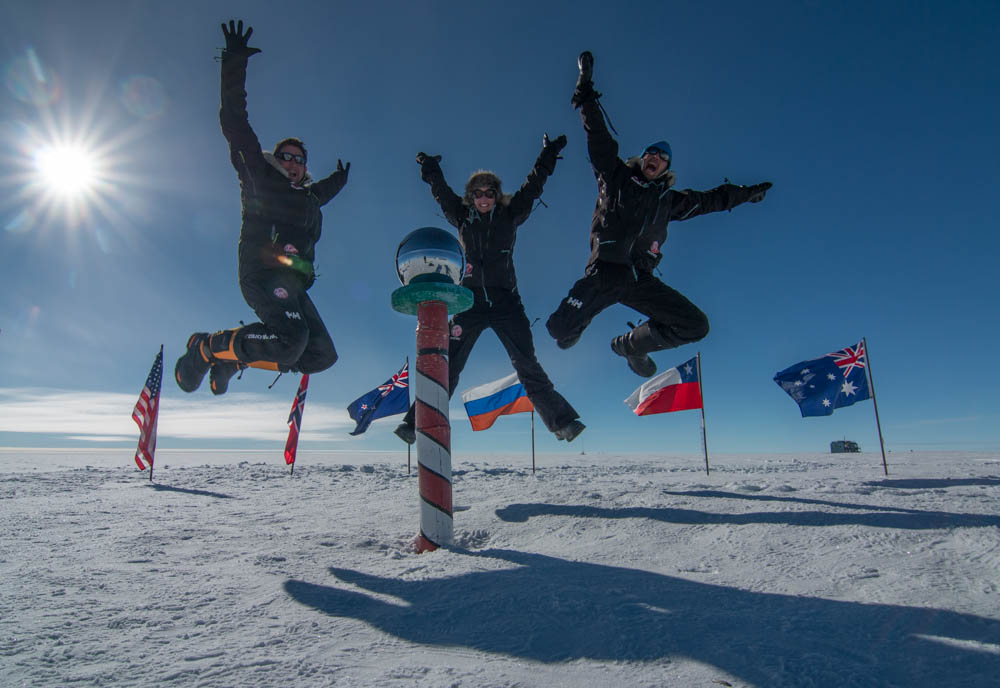
For many Antarctic travellers the obvious objective is the South Pole. Here, driven by the geographic, symbolic and scientific value of 90° South, the United States established Amundsen–Scott Station which accommodates a seasonally-varying contingent of scientists. The nearby “Celebratory Pole” also attracts skiers, tourists and expeditioners during the brief Antarctic summer.
But - and this is a considerable “but” - what if you wanted something more than the (indubitably iconic) South Pole? More than simply standing at the bottom of the Earth? Maybe travel to a place that is well off the normal Antarctic “beaten track”, as far as possible from any coastal point and totally isolated from human presence?
Such a place would, truly, define “remote”.
And such a place exists: the Antarctic Pole Of Inaccessibility (POI, sometimes Southern POI or SPOI). Here, almost hidden, is a place which, perhaps counter-intuitively, demonstrates polar inaccessibility is not merely a function of latitude.
Every continent - and even the world’s oceans - has its own Pole Of Inaccessibility. Defined as the point furthest from a given geographical boundary, typically the coastline, these locations are not necessarily the geographical centre of a landmass. They are, rather, the points most distant from access. As a result these are often among the most challenging places to reach.
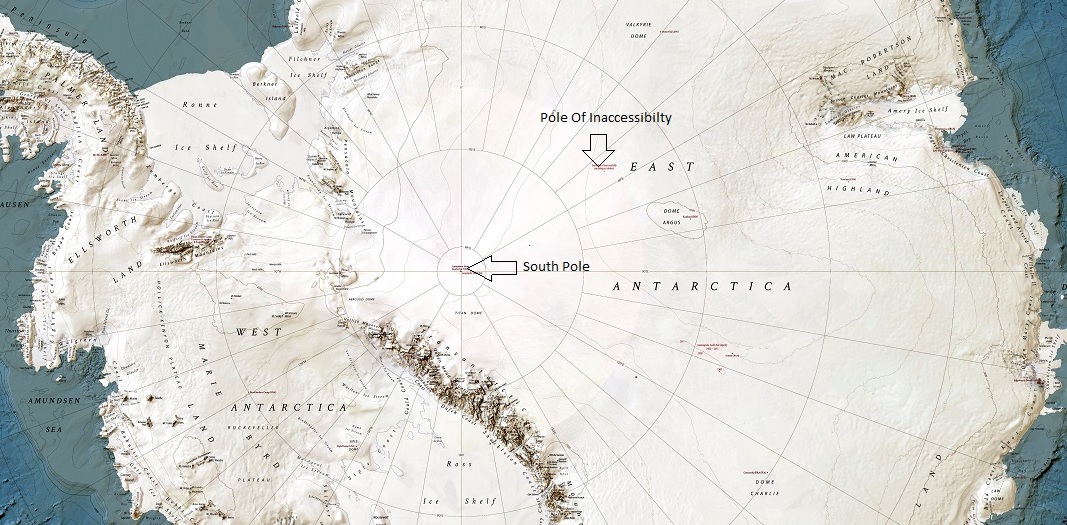
In Antarctica, this latter concept takes on an entirely different scale. The continent is vast, high, glaciated and overwhelmingly empty. Travel is slow, conditions severe and weather windows narrow. At 3,700m altitude, 900 kilometres from the South Pole, with an average annual temperature of -57°c and lying deep, frigid and isolated within the East Antarctic Plateau, the Southern POI is generally regarded as Earth’s most remote location (and some in the science community believe it may be the coldest place on earth’s surface).
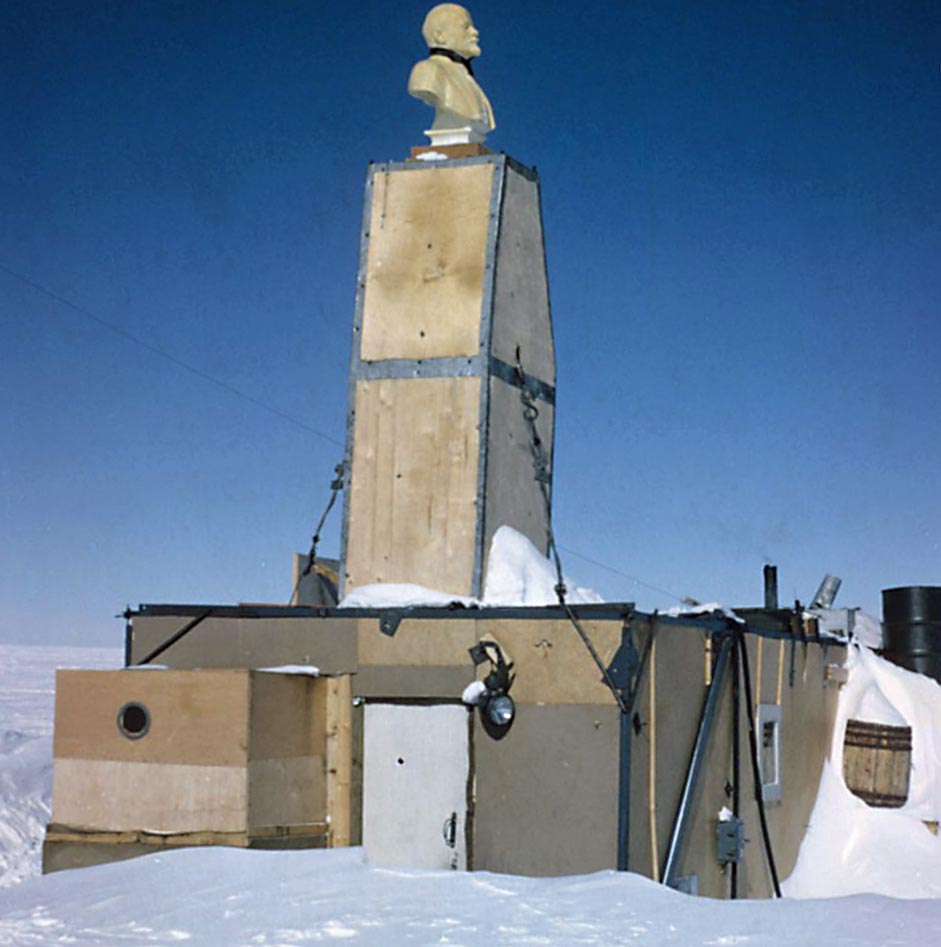
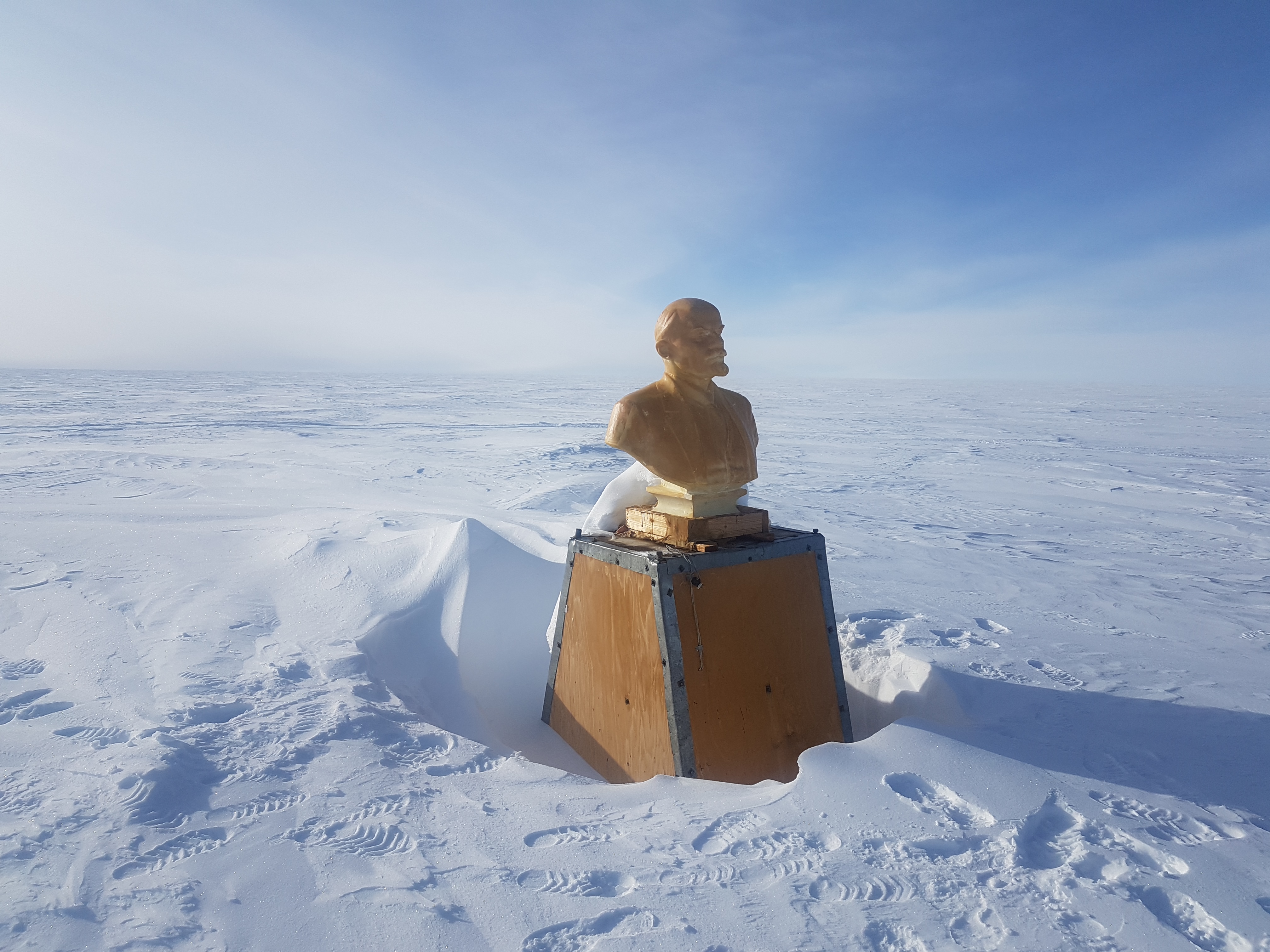
Yet, even here, there is a fragment of history! At the height of the cold war the Soviets were not to be outdone. Following a concept introduced by Icelandic Arctic explorer, Vilhjalmur Stefansson, the Soviets calculated the point furthest from the coast (the POI). Led by Yevgeny Tolstikov, their expedition found the “most extreme” point of the continent, doing so partly for scientific purposes and partly for geopolitical flex to demonstrate they could conquer such a challenge. Here they established an Antarctic station which, whilst only briefly occupied, came replete with a bust of Lenin.
Today the POI remains a very remote, oft-forgotten, objective. If the South Pole is the „Everest of Antarctica“ and a well-visited icon, the POI is the remote and unforgiving „Antarctic K2”. But, to those in the know, the POI is a coveted prize – and one with a strange twist: For a few more years, until (if?) it is finally buried, the POI remains home to that bust of Lenin which is the only visible remains of the old Soviet station and (usually) remains proud of the surface snow. Immobile, frozen and lost, the bust stares over a gelid sea of ice towards the Moscow of 1958.
Reaching it overland is no small undertaking. The Soviet traverse of 1958 was the first recorded arrival. A US-led expedition followed, then a small handful of scientific and private expeditions over subsequent decades. The history of actual travel to the SPOI is limited, yet deeply compelling. Each journey has required meticulous planning, specialist vehicles or ski capability and complete self-sufficiency in one of the harshest environments on Earth.
And here is the reality: the Antarctic Pole of Inaccessibility remains extraordinarily difficult to access. It is not a destination for casual ambition. It demands commitment, resilience and expert logistical support.
For those who seek to go beyond the conventional Antarctic milestones - whether to drive across the plateau in specialist polar vehicles or, perhaps, to ski the last miles into the SPOI (what many describe as “skiing the hardest degree”) - the SPOI represents a rare and meaningful objective. A place defined not by fame, but by isolation. Not by symbolism, but by true remoteness.
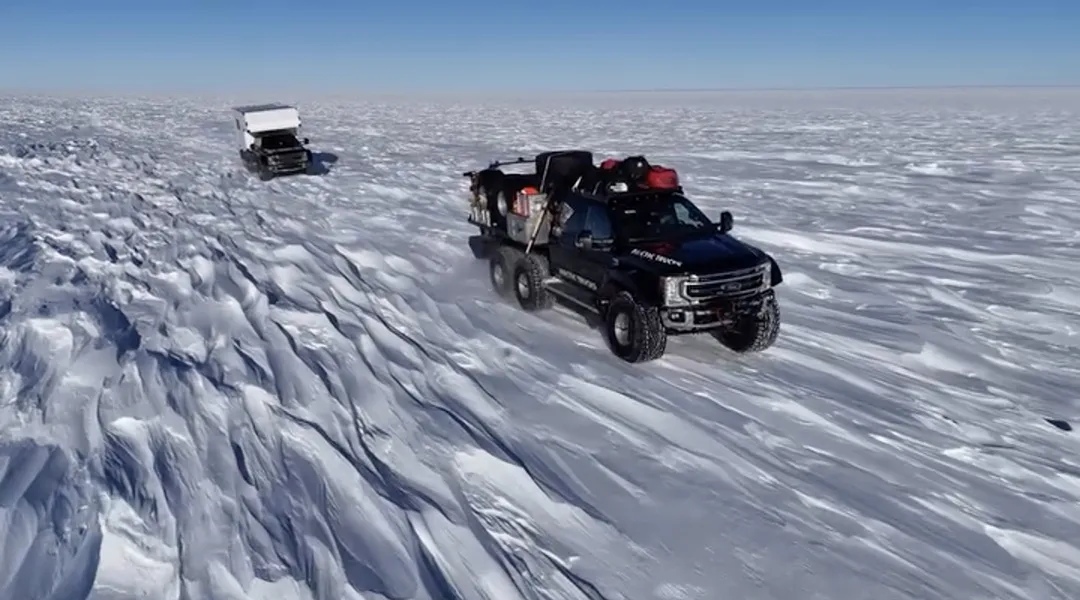
We are the only company able to guide and fully support overland expeditions to the Antarctic/Southern Pole Of Inaccessibility, whether by vehicle traverse only or supporting a partial ski/foot (or other means of propulsion) journey. Aircraft crews have strict (and sensible) limits about operating at high altitude and in weather, meaning journeys can be cancelled or seriously delayed; overland access by traditional belt vehicle transport (rather than our specialist vehicles backed up by decades of polar travel experience) takes months instead of days.
In a world where even the extremes are becoming familiar, it is difficult to imagine a destination that is genuinely more remote.
Are you among the few who are ready for the challenge?
Postscript: In passing and, of course, for the sake of correctness: there are several calculated positions for a “Southern or Antarctic POI”, reflecting Antarctica’s own peculiarities. The exact POI coordinates shift depending on whether one defines the coastline by, for example, physical “coast”, grounded ice or floating ice shelves which themselves are constantly moving. A more recently calculated “outer” point lies at 83°54′S, 64°53′E and there are several other well-calculated variants. But, for most historical and expeditionary purposes, the 1958 Soviet site remains the recognised objective/POI).
Gallery pictures show the height of the Lenin bust - now just proud of the snow cover - above the original station building and the location of the POI relative to the South Pole