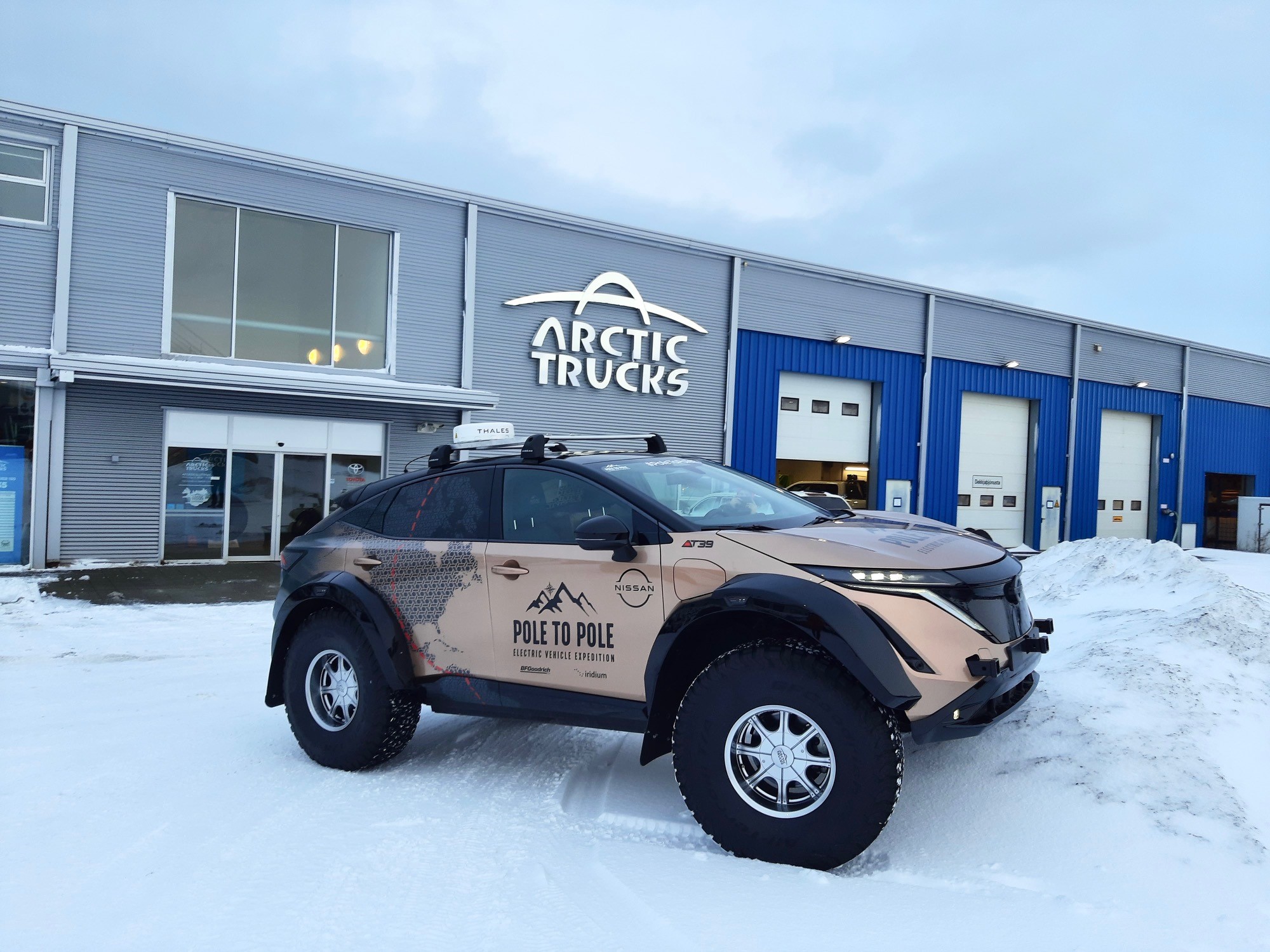
Following the previous success of the ground breaking Pole To Pole electric vehicle expedition (which took Chris and Julie Ramsay and our Arctic Trucks Polar support team to the South Pole as well as the historic Northern Magnetic Pole), we felt our followers might now enjoy some background to the modifications applied to the standard Nissan Ariya EV by our superb Arctic Trucks Polar engineering team. This necessary work was critical to ensure that the vehicle was carefully and sensitively morphed into a unique platform that could successfully tackle the challenging and extremely unforgiving conditions which lay ahead.
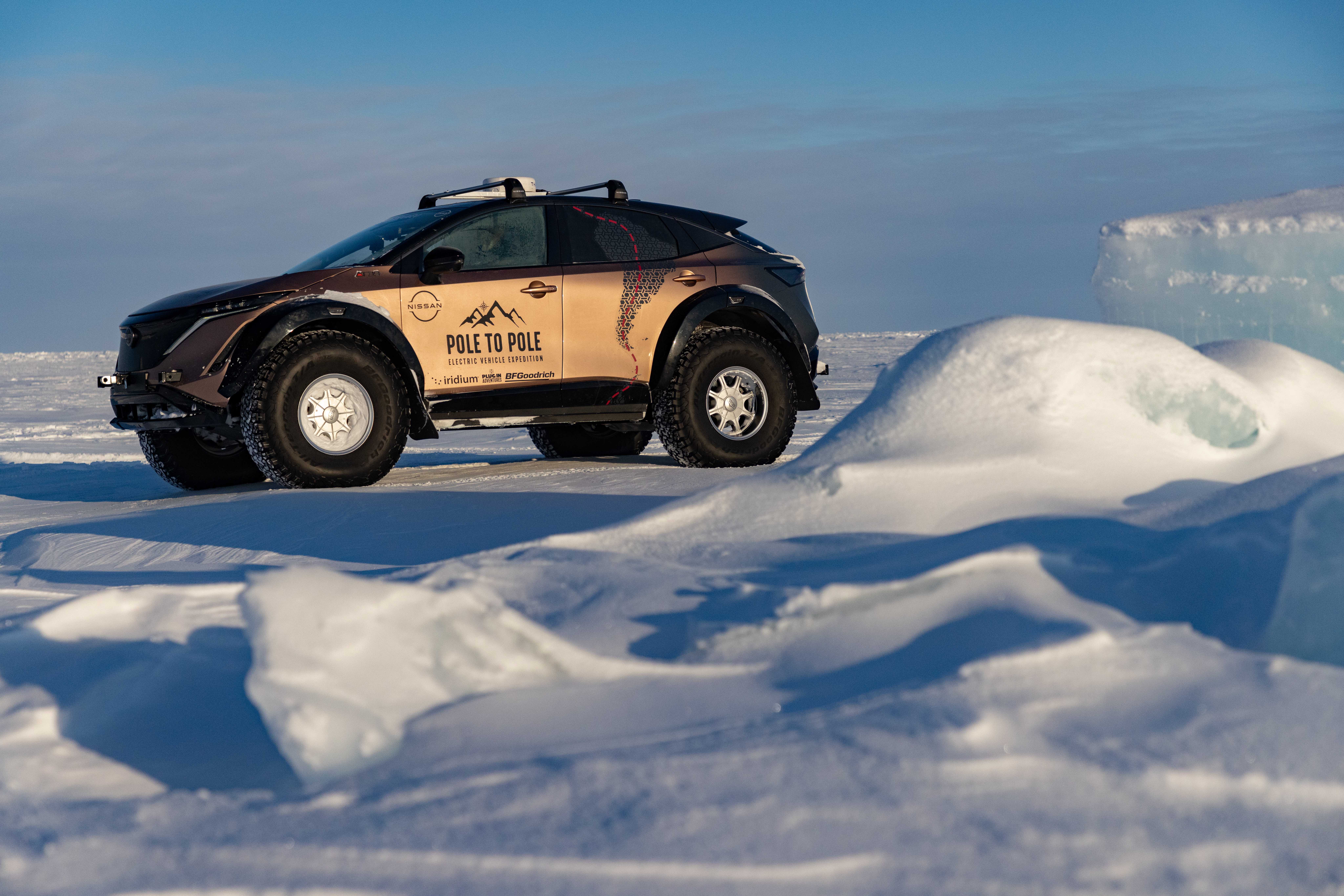
The result - the Nissan Ariya AT39 E-4ORCE EV - was a resounding success; a vehicle that was cross-engineered by Arctic Trucks to be driven by Chris and Julie all the way from “Pole to Pole” on vastly varying and ultra-difficult terrain. This route, between the historic Northern Magnetic Pole in the far north of Canada all the way to the actual South Pole, was accomplished without any further en-route modification/change.
We are very proud, both of the expedition’s achievement and our modifications. The latter, some of which were substantial, ensured the Ariya AT39 was fully capable of this highly rigorous expedition without compromising the original vision of the Nissan design team.
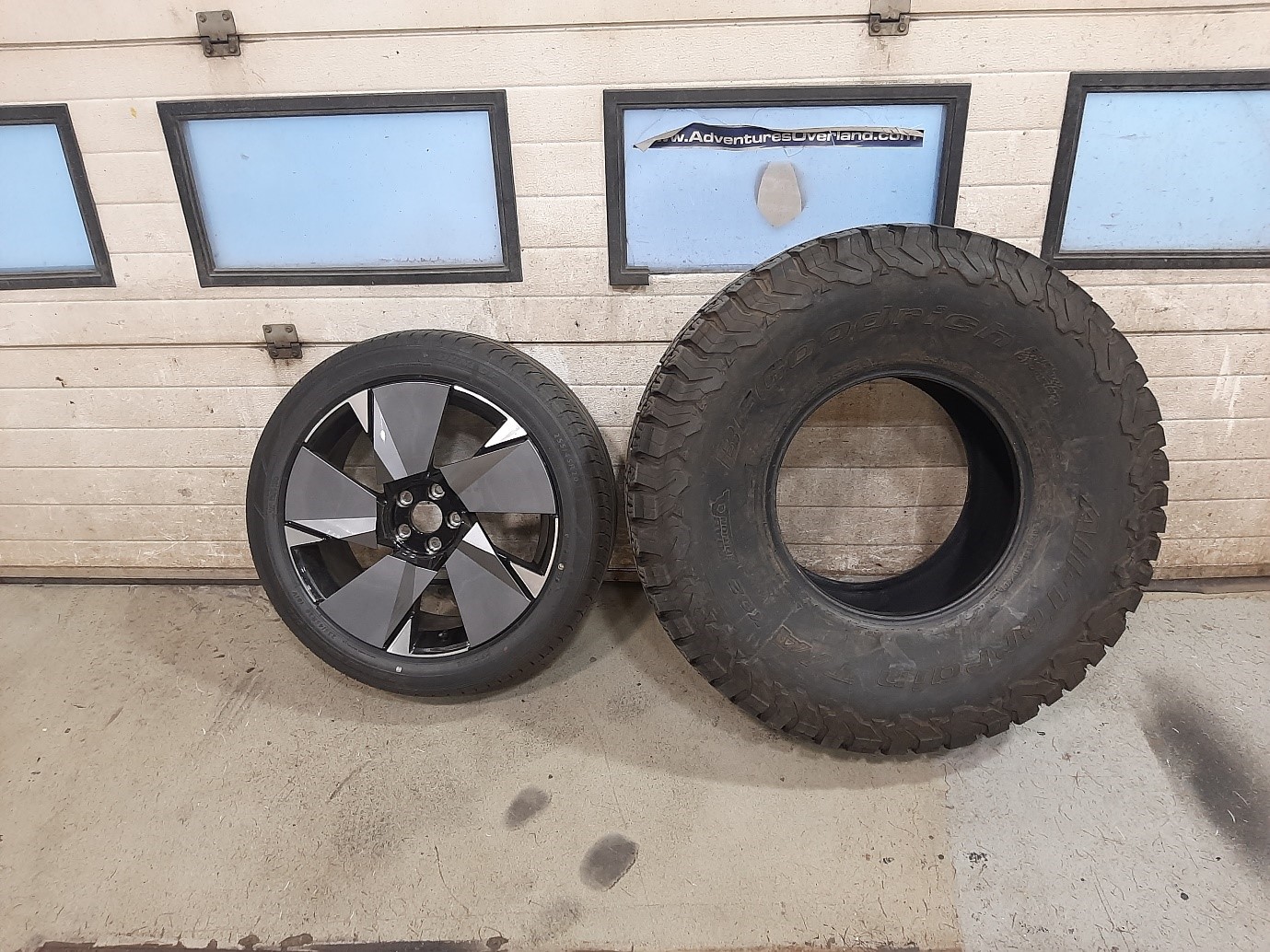
The gallery shows the vehicle entering our workshops and the very considerable difference in tyre sizes that, amongst other necessary modifications, had to be accommodated to enable the @BFGoodrichTires 39x13.5 R17 All-TerrainT/A KO2 tyres to be fitted.
Also shown are some of the chassis and related work that was undertaken. This included subframe relocation as well as redesign of critical component mounting points to accommodate the new suspension geometry / configuration that was necessitated by the huge difference in tyre sizing, amongst other factors.
This meant a very substantial 120mm lift to the entire suspension. To achieve this change, whilst always bearing in mind the car was to be driven for long distances on both “normal” roads and extreme off-road - and so keeping the car’s centre of gravity as low as possible to maintain stability, some components were rejigged or built from scratch. The balance of maintaining the crucial design essence (and comfort) of the Nissan Ariya crossover EV, whilst creating a vehicle of such extreme capability, was always at the forefront of our thinking.
Also to be borne in mind is the lack of experience within the electric vehicle industry in general regarding engineering (or, indeed, reengineering) any electric vehicle for use in such extreme conditions; a factor requiring much original and detailed thinking to produce a workable, effective, solution.
Part 2 of this two part blog will follow shortly.